

Mon–Thu 8am–4:30pm CT · Fri 8am–3pm CT
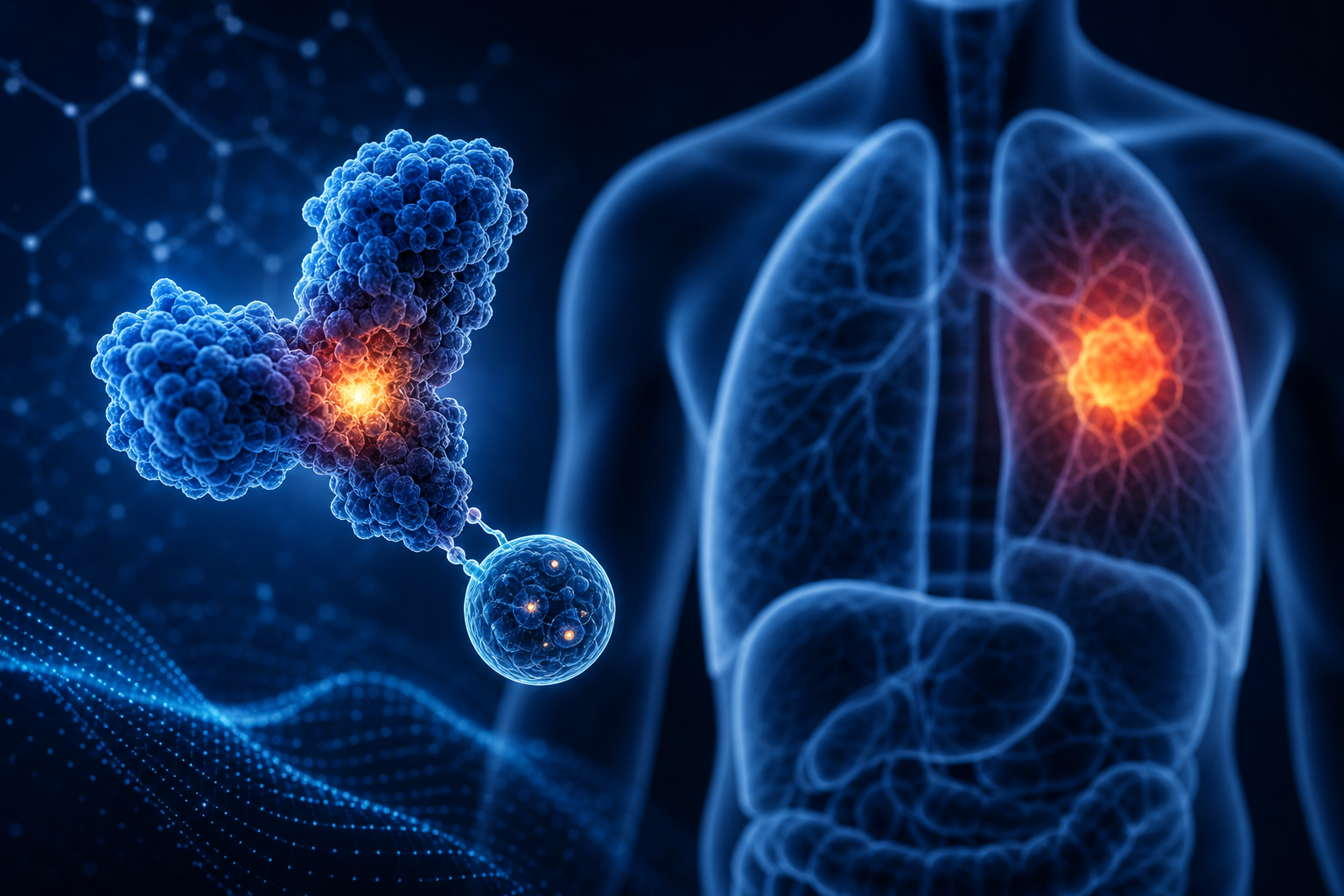
Understanding Theranostics
Anatomy of a Theranostic
A theranostic is a precision-built molecule designed to find, image, and treat cancer cells. Five parts — a target, a ligand, a linker, a chelator, and a radioisotope — each with one job, delivering the right payload to the right cells.
Scroll to follow the delivery
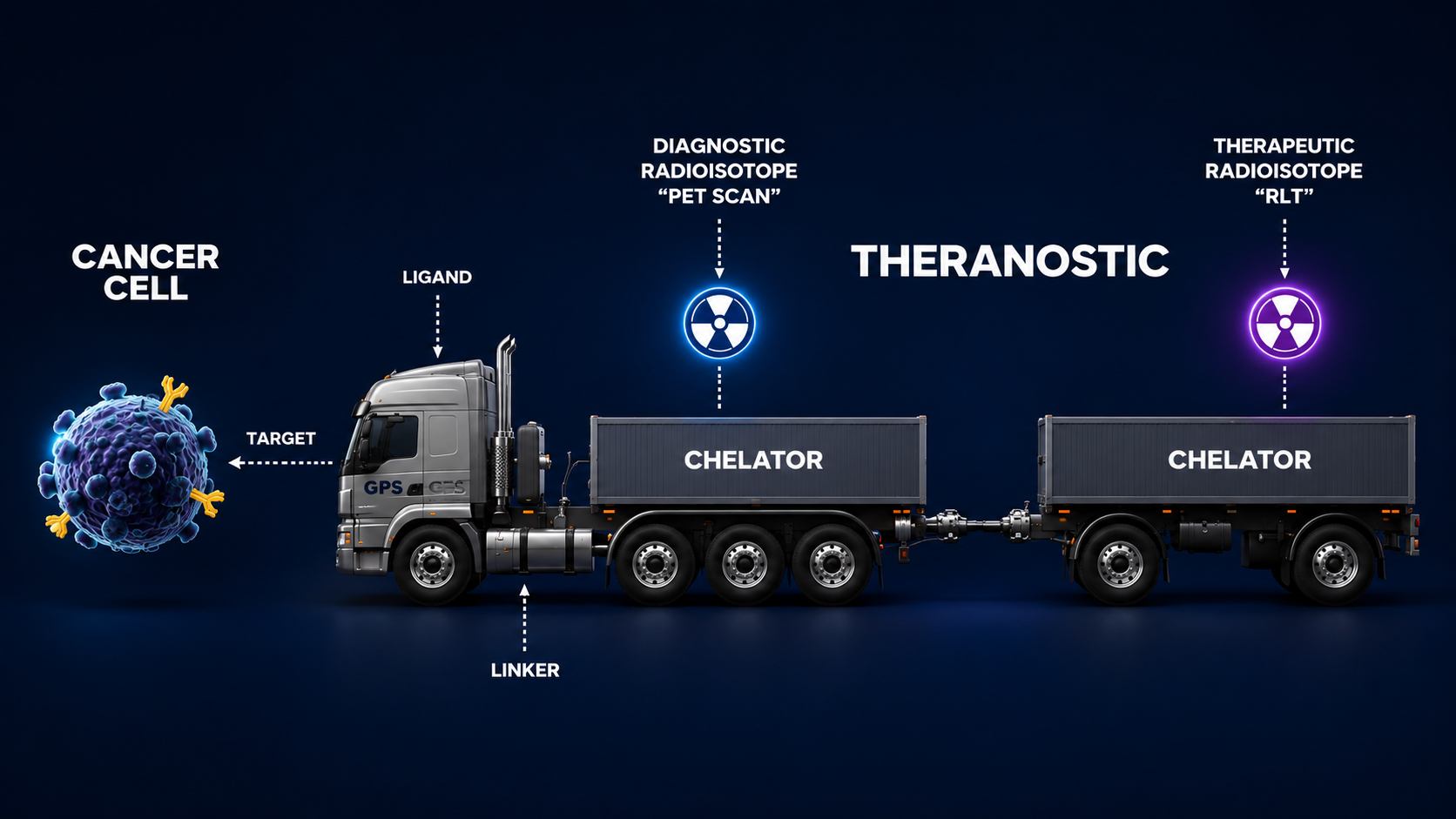
The Components of a Theranostic
Think of it like a delivery truck
Theranostics combines precision targeting with the power of radioisotopes — each component plays a role in delivering the right payload to the right cells.
Target
The specificity and abundance of the target on the cancer cells determine the effectiveness of detection on PET scans and the success of treatment. A highly specific target reduces side effects, while a less specific target increases the likelihood of side effects.
Example
PSMA is a common target for prostate cancer but is also found in the salivary glands, leading to potential side effects like dry mouth.
Why It Matters
Precise targeting drives every outcome
Precision
The targeting vector finds cancer cells expressing the specific target.
Payload Delivery
The radioisotope delivers an imaging signal or therapeutic radiation.
Target Engagement
High-affinity binding improves accuracy and treatment effectiveness.
Safety
Specific targeting helps minimize off-target exposure and side effects.
The effectiveness of a theranostic depends on the specificity and abundance of the target. A highly specific target improves outcomes and reduces potential side effects.
Inside a theranostic
The same molecule, part by part. Select a component to explore its role.
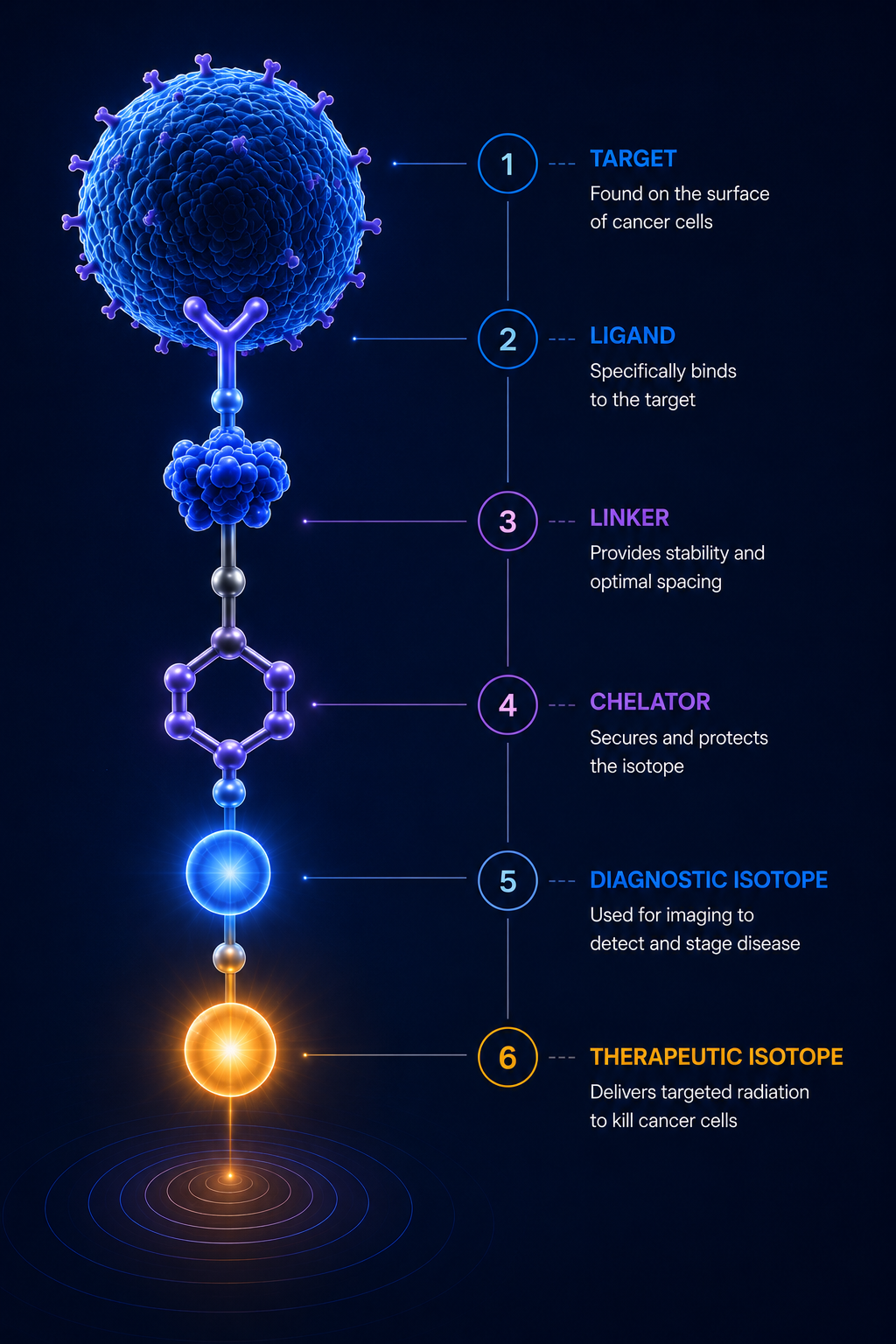
About This Model
This interactive model illustrates the key components of a theranostic and how they work together to detect and treat cancer cells.
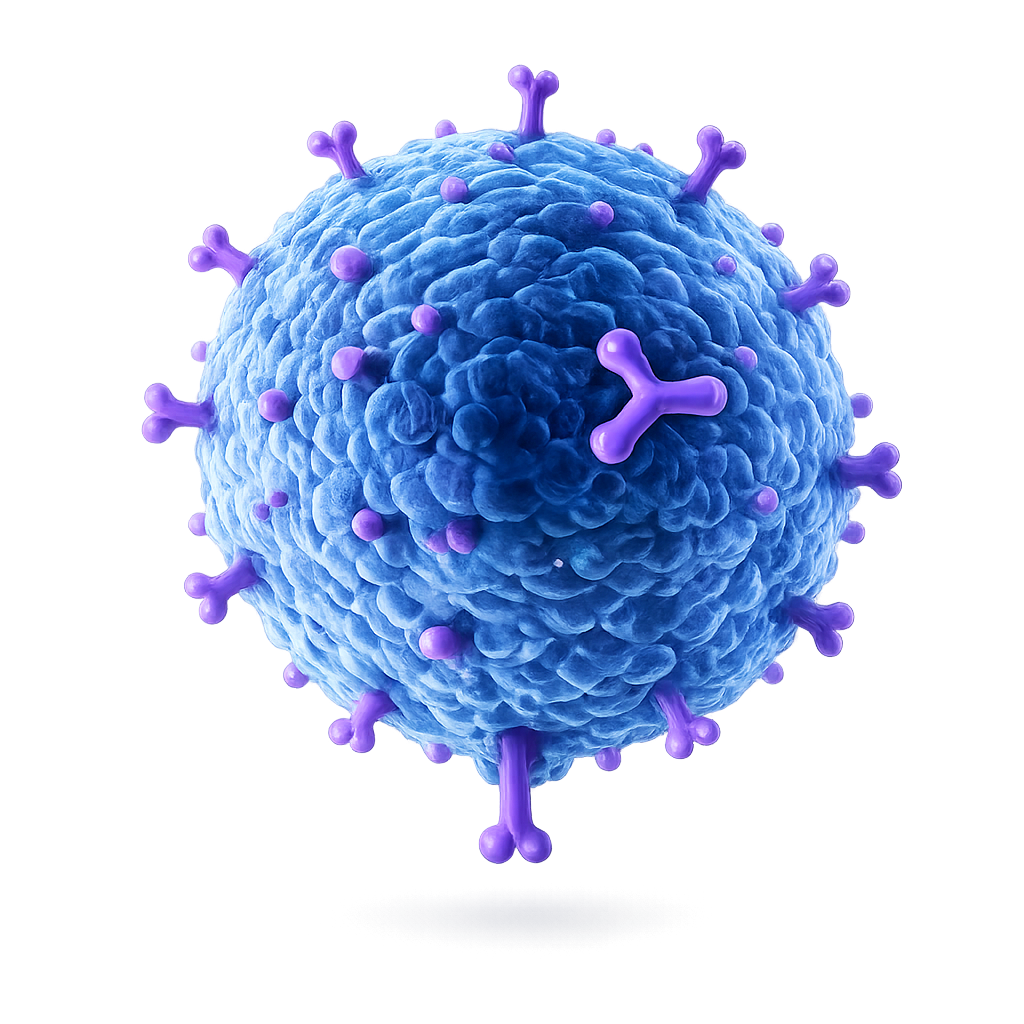
Target
Targets are proteins or receptors that are overexpressed on cancer cells. Radioligands bind to these targets to deliver imaging or therapeutic payloads with high precision.
Common Targets
Why It Matters
High target specificity improves imaging clarity, maximizes therapeutic efficacy, and minimizes off-target effects.
This model is a simplified representation for educational purposes and does not capture all molecular complexities.
On the cancer cell
Zoomed all the way in: the chelator holds the radioisotope, the linker sets the spacing, and the targeting vector binds its target on the cell surface.

Share your feedback
Help us improve your experience