 Global Conferences RLT Education RLT Components Sponsors Trial Stats
How to NavigateNEW Ecosystem Connect Distinguished Investigators Global Conferences RLT Education RLT Components Sponsors Trial Stats Dictionary About Us Our Values
Luke Nordquist, MD, FACP, CEO
drluke@xcancer.comTony Romero, MS, CCRC, Director of Research
tromero@gucancer.com
ARE YOU A COMMUNITY MEDICAL OR RADIATION ONCOLOGIST?
- Interested In Starting A Radiopharmaceutical Program At Your Center But Seems Complex?
- Interested In Conducting Radiopharmaceutical Clinical Trials But Have No Current Or Limited Clinical Trials Program
- Interested In Helping Fill The Critical Shortage Of Community Cancer Centers Capable Of Conducting Radiopharmaceutical Clinical Trials
XCancer® has the experts and the experience to provide your center with the backbone, tools, strategies, and business models to make you successful at both. XCancer® is a community cancer center with a solo medical oncologist that has developed a leading radiopharmaceutical clinical trials program recognized globally. Using its experience and processes, XCancer® has successfully guided community cancer centers across the United States with developing highly efficient and quality clinical trial programs.
Start your program today:
Physicians
Advanced Knowledge & Opportunites
- Advance your Knowledge of Theranostics, Radiation, & Clinical Trials
- Search a Comprehensive List of Global Oncology-Theranostic clinical trials
- Easy access to Publications & Presentations regarding investigational Theranostic agents
- Opportunities & Access to Strategy Advisors on How to Develop a Theranostic Clinical Trials Program at Your Site
- Access to Clinical Trials Sponsors in search of potential clinical trial sites
- Keep updated of Upcoming Theranostic Conferences

Distinguished Investigator
A Distinguished Investigator of Theranostics is a level of distinction conferred upon an individual physician who has demonstrated a mastery of conducting novel radioligand therapies and molecular imaging clinical trials.

RLT Components
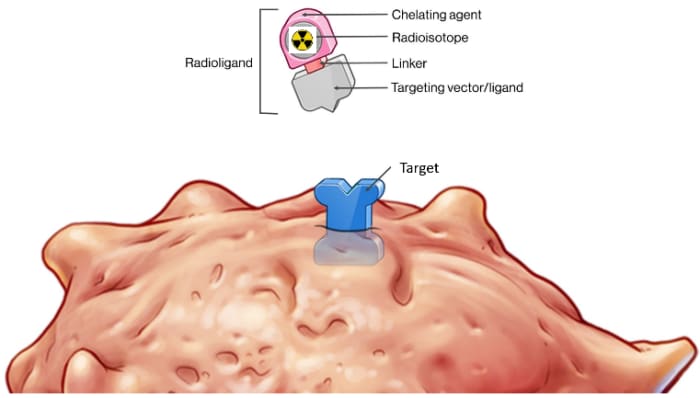
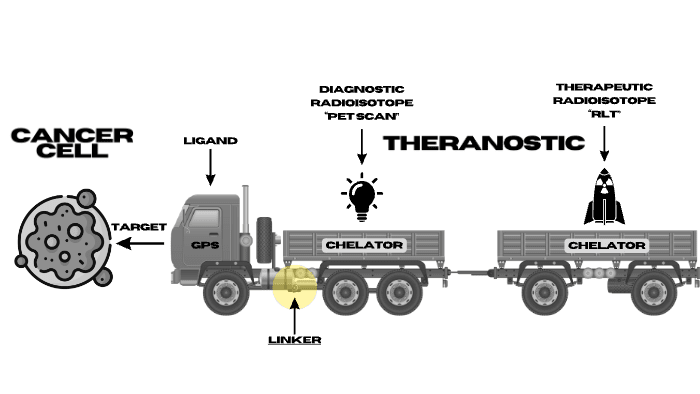
RADIOLIGAND THERAPY (RLT) is a highly effective approach to very accurately locating cancer cells and effectively killing those same cells by delivery various radioisotopes to a specific target that is located on a type of cancer. Some of the Radioisotopes are diagnostic for locating cancers & some therapeutic to treat the cancers.
There are several Components to a RLT that are simply demonstrated in the truck diagram including:
- Cancer Targets
- Ligand (demonstrated as the Truck GPS set to find a specific Target)
- Diagnostic Radioisotopes (demonstrated as light bulbs that light the cancer Targets on a PET scan)
- Therapeutic Radioisotopes (demonstrated as bombs that kill cancer cells that express the target with either Alpha or Beta radiation)
- Linker (demonstrated as the hitch keeping the Radioisotope attached to the Ligand)
- Chelator (demonstrated as the Trailers which keeps the Radioisotope on Target).
To learn more about the specific components being studied today on clinical trials around the world check out the RLT COMPONENTS Tab.
Education
Stats
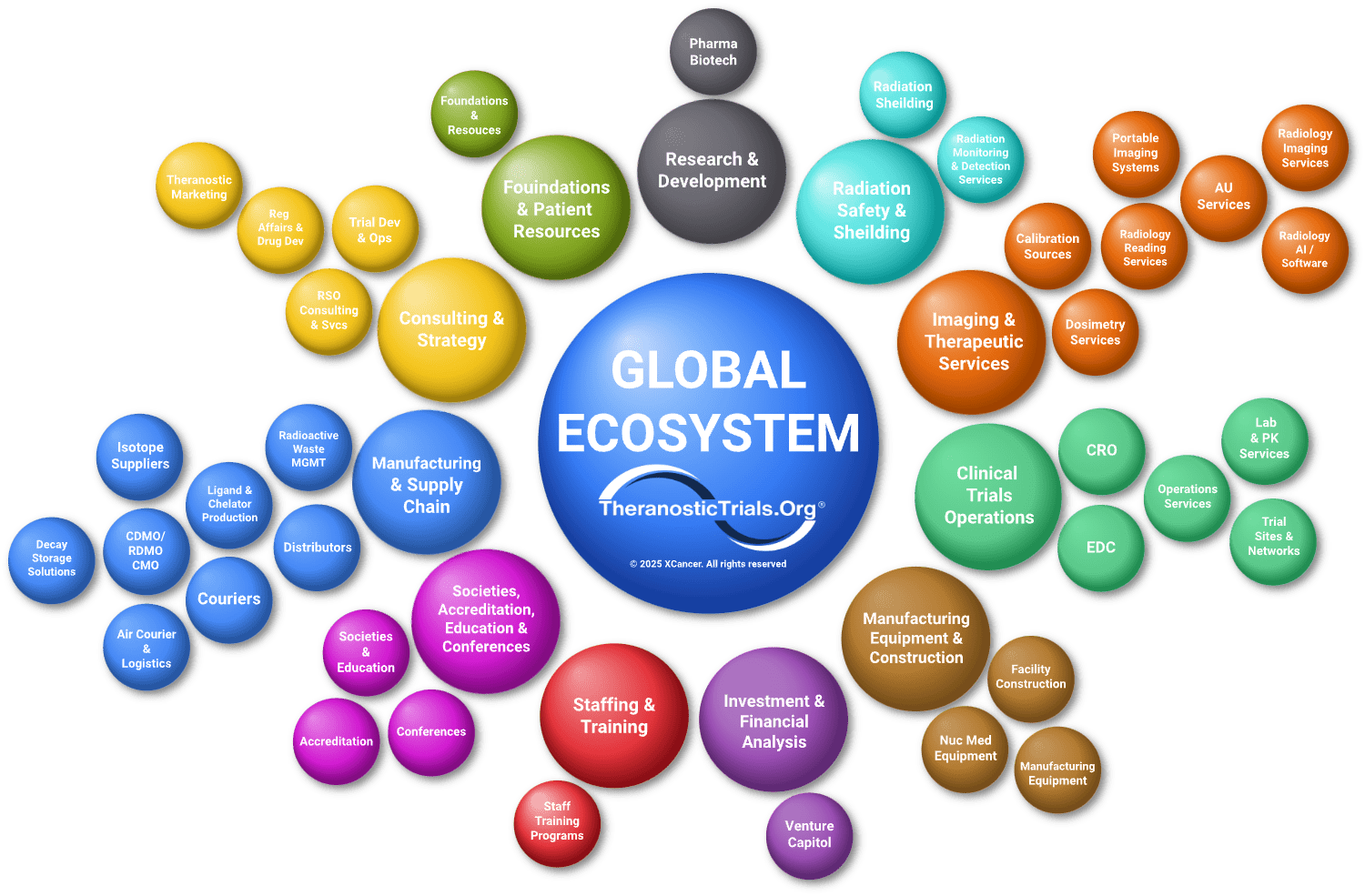
Theranostic Trials Global Ecosystem
View All
Sponsors
Share your feedback
Help us improve your experience