 Global Conferences RLT Education RLT Components Sponsors Trial Stats
How to NavigateNEW Ecosystem Connect Distinguished Investigators Global Conferences RLT Education RLT Components Sponsors Trial Stats Dictionary About Us Our Values
Luke Nordquist, MD, FACP, CEO
drluke@xcancer.comTony Romero, MS, CCRC, Director of Research
tromero@gucancer.com
Learn More About Benefits of
Becoming a Sponsor!
Industry
Increased Awareness & Networking
- Improve Patient & Physician Awareness through uploaded Sponsor-controlled Educational Content, Trial Criteria, Presentations & Publications, all related to your investigational product.
- Market Globally on a highly visible platform to a highly focused audience including cancer patients who can greatly benefit enrolling on yout trial.
- Network on a Single Platform and align with a Multitude
of Professionals from several areas of the Theranostic Industry
including:
-
Sponsors
-
CROs
-
CDMOs
-
Couriers
-
Advocacy Groups
-
Venture Capitalists
-
Medical Societies
-
Physicians
-
- Promote Upcoming Theranostic Conferences
- Access to Real-time Trial Stats & Site Stats
Ecosystem Connect

Advancing the field of cancer Theranostics requires a multitude of industries working together. Companies provide discovery, development, production, clinical trial management, radioactive courier services, equipment suppliers, staffing, dosimetry, capital investment, regulatory agencies, cancer centers, and many more.
View EcosystemAbout Us
TheranosticTrials was developed through the collaboration of 2 key opinion leaders in the field of Radiopharmaceuticals. Drs. Luke Nordquist and Oliver Sartor saw the need for a such a web-based tool to provide patient education & ultimately improve access to the rapidly expanding field of radiopharmaceutical clinical trials. Patients globally are seeking access to these highly sought-after clinical trials which are providing new hope.

Distinguished Investigator
A Distinguished Investigator of Theranostics is a level of distinction conferred upon an individual physician who has demonstrated a mastery of conducting novel radioligand therapies and molecular imaging clinical trials.

RLT Components
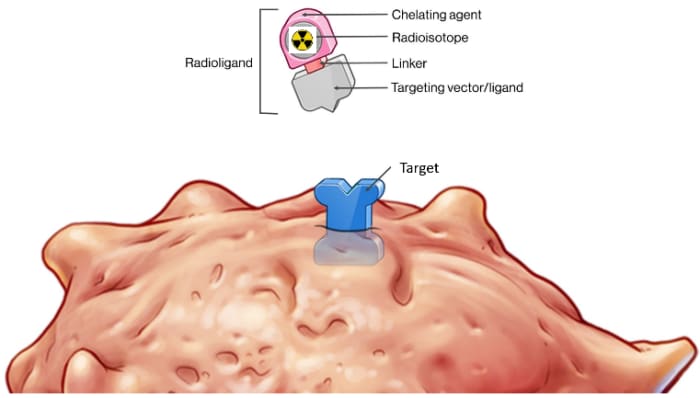
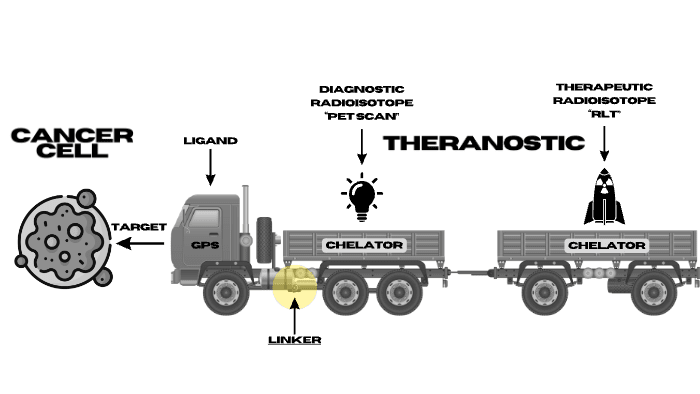
RADIOLIGAND THERAPY (RLT) is a highly effective approach to very accurately locating cancer cells and effectively killing those same cells by delivery various radioisotopes to a specific target that is located on a type of cancer. Some of the Radioisotopes are diagnostic for locating cancers & some therapeutic to treat the cancers.
There are several Components to a RLT that are simply demonstrated in the truck diagram including:
- Cancer Targets
- Ligand (demonstrated as the Truck GPS set to find a specific Target)
- Diagnostic Radioisotopes (demonstrated as light bulbs that light the cancer Targets on a PET scan)
- Therapeutic Radioisotopes (demonstrated as bombs that kill cancer cells that express the target with either Alpha or Beta radiation)
- Linker (demonstrated as the hitch keeping the Radioisotope attached to the Ligand)
- Chelator (demonstrated as the Trailers which keeps the Radioisotope on Target).
To learn more about the specific components being studied today on clinical trials around the world check out the RLT COMPONENTS Tab.
Education
Stats
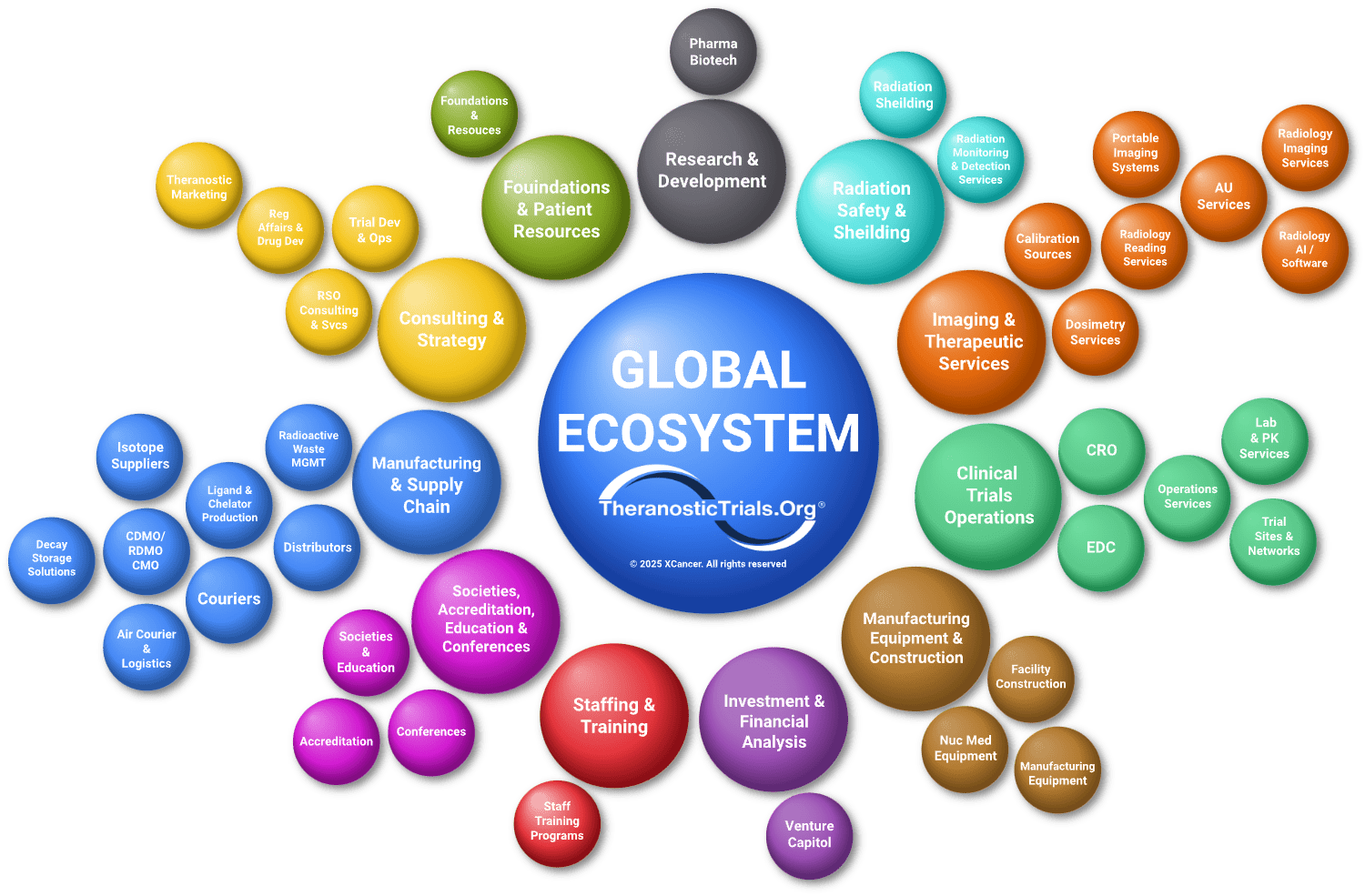
Theranostic Trials Global Ecosystem
View All
Sponsors
Share your feedback
Help us improve your experience